
Discover the definitive Grok 4.5 pricing breakdown. Explore SuperGrok tiers, xAI API costs, what Grok is, and how to get started with this AI today.
If you have been paying attention to the artificial intelligence boom over the last few years, you already know that the landscape shifts almost weekly. But in 2026, the release of Grok 4.5 by SpaceXAI (Elon Musk’s xAI venture) has genuinely turned heads. Whether you are a software engineer looking for the next great pair-programming buddy, a business owner trying to automate workflows, or just a curious tech enthusiast, you have probably asked yourself one major question: how much is this going to cost me?
Understanding grok 4.5 pricing can feel a bit like navigating a maze in the dark. Between X Premium subscriptions, standalone SuperGrok tiers, and developer API token rates, the options are vast and sometimes confusing. In this comprehensive guide, we are going to strip away the jargon. We will break down exactly what Grok is, explore every pricing tier available right now, and show you exactly how to get Grok without breaking the bank. By the end of this article, you will know precisely how to use Grok to boost your productivity and whether it is the right AI investment for your specific needs.
What is Grok? Understanding the AI Behind the Hype
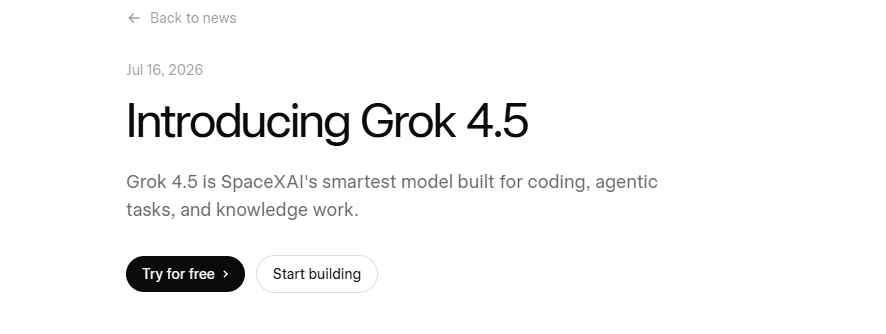
Before we dive into the numbers, let’s establish a baseline. So, what is Grok, exactly?
Originally launched as an AI with a rebellious streak and a penchant for sarcasm, Grok has matured into a serious frontier model. Developed by xAI (often referred to in the tech space as SpaceXAI), AI Grok is built to tackle real-world engineering tasks, agentic workflows, and complex knowledge work [[8]], [[10]]. Unlike some models that are strictly conversational, Grok 4.5 was trained jointly with Cursor using trillions of tokens of real coding data [[9]]. This means it does not just chat; it builds, debugs, and executes.
How Grok Evolved to Version 4.5
The leap to version 4.5 is significant. While earlier versions of Grok were primarily used for real-time internet searches and witty banter on X (formerly Twitter), Grok 4.5 is a mixture-of-experts model designed for heavy lifting [[9]]. It excels at long-context reasoning and matches top-tier competitors on complex STEM and coding benchmarks [[11]].
Because it is backed by xAI’s massive proprietary compute clusters, the model boasts a massive 500,000-token context window [[7]]. To put that in perspective, you can feed Grok 4.5 an entire software repository or a 400-page legal contract in a single prompt, and it will understand the nuances without “forgetting” the beginning of the document.
The Complete Grok 4.5 Pricing Breakdown
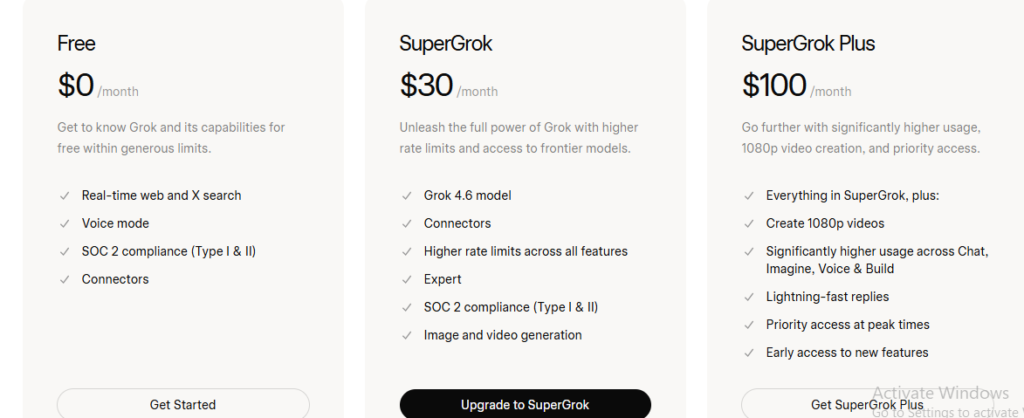
When you look at grok 4.5 pricing, it is crucial to separate the consumer experience from the developer experience. The cost structure changes dramatically depending on whether you are clicking buttons in an app or writing code to interact with the API.
Consumer Plans: SuperGrok and X Premium
For the everyday user, xAI has rolled out several tiers to access their flagship models.
- X Premium+: Currently priced around $22 per month, this gives you enhanced access to Grok directly within your social feed [[20]]. However, basic Premium tiers might default you to lighter, faster versions of the model (like Grok 4.1 Fast) to save on server load [[20]].
- SuperGrok: Priced at $30 per month, this is the sweet spot for most enthusiasts [[15]]. SuperGrok grants you significantly higher message caps, priority access to the newest models (including 4.5), and advanced features like deep-search and image generation without the noise of the X timeline.
- SuperGrok Heavy: For the absolute power users who run complex, multi-step agents all day, xAI introduced a Heavy tier that can reach up to $300 a month [[18]]. This tier essentially removes the training wheels, giving you massive API-equivalent limits directly in the consumer interface.
API Token Pricing for Developers
If you are building an app or integrating AI Grok into your business software, you will be dealing with token-based billing. The grok 4.5 pricing for API access is remarkably aggressive and highly competitive.
- Input Tokens: $2.00 per 1 million tokens [[6]].
- Output Tokens: $6.00 per 1 million tokens [[12]].
Tokens are essentially the syllables and words the AI processes. A million tokens is roughly equivalent to 750,000 words, or about three average-length novels. Getting input processing for two bucks is incredibly cheap in the 2026 AI landscape, making it a favorite for startups building automated agents.
How to Get Grok 4.5: Access Tiers Explained
Figuring out how to get grok depends entirely on your technical comfort level and what you plan to do with the model.
Getting Grok via X (Twitter)
The easiest route for most people is simply through the X app or website. If you subscribe to X Premium or Premium+, Grok is integrated right into your sidebar. Just tap the Grok icon, and you are chatting. To ensure you are using the flagship model, you usually need to manually select “Grok 4.5” from the model drop-down menu in the chat interface, as the default might be set to a faster, less capable version.
Using the Standalone Grok App
Do not want to use X? You can download the standalone Grok app from the Apple App Store or Google Play Store [[13]]. The standalone app offers a cleaner, distraction-free interface that is fantastic for long-form research, document analysis, and deep-work sessions. If you are a student or a writer, this is often the preferred way to access the model without the endless scroll of social media tempting you away from your work.
How to Use Grok 4.5 for Everyday Tasks and Coding
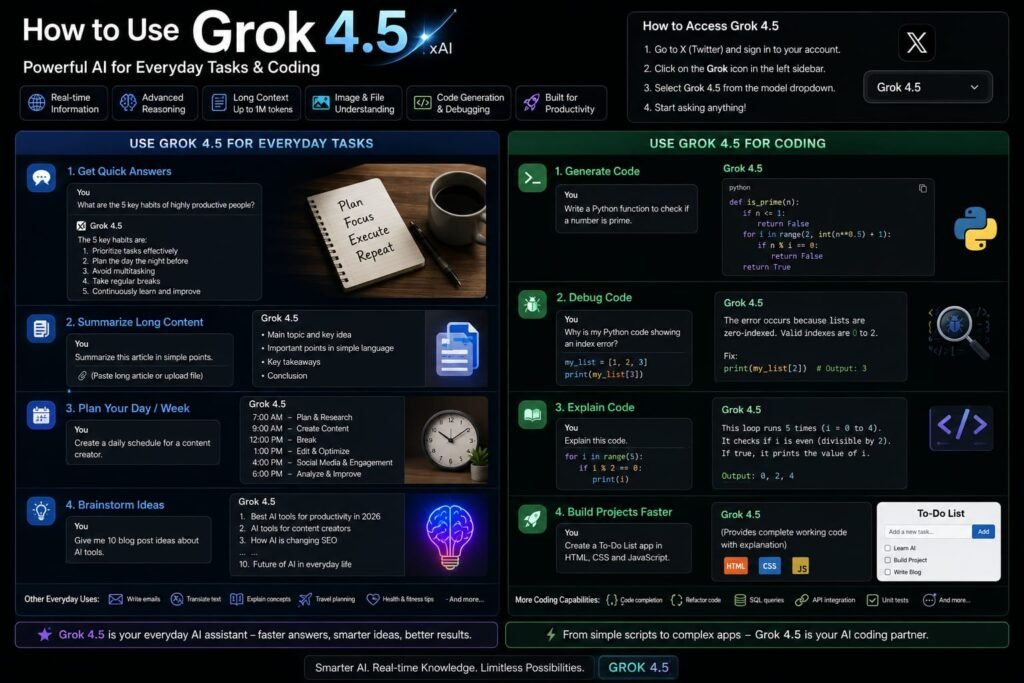
Knowing how much it costs is only half the battle. Knowing how to use grok effectively is where you actually see a return on your investment.
Maximizing Productivity with AI Grok
Because Grok 4.5 has real-time access to the vast amounts of public data on X, it is unparalleled for trend analysis, sentiment tracking, and breaking news synthesis. Try asking it to summarize the public reaction to a recent tech product launch, or have it draft a contrarian marketing strategy based on live user complaints. Treat it less like a search engine and more like a brilliant, slightly cynical research assistant who has read every post on the internet.
Grok 4.5 in Cursor and IDEs
For developers, how ro use grok (yes, we see you frantically typing that typo into search engines at 2 AM!) is best answered by looking at IDE integrations. Grok 4.5 was heavily optimized for environments like Cursor [[2]]. You can highlight a messy block of Python or Rust code, hit a shortcut, and ask Grok to refactor it for memory efficiency. Because the model was trained jointly with Cursor on trillions of tokens of coding data, it understands context and project architecture far better than generic chatbots [[9]].
Grok 4.5 vs. Competitors: Is the Price Worth It?
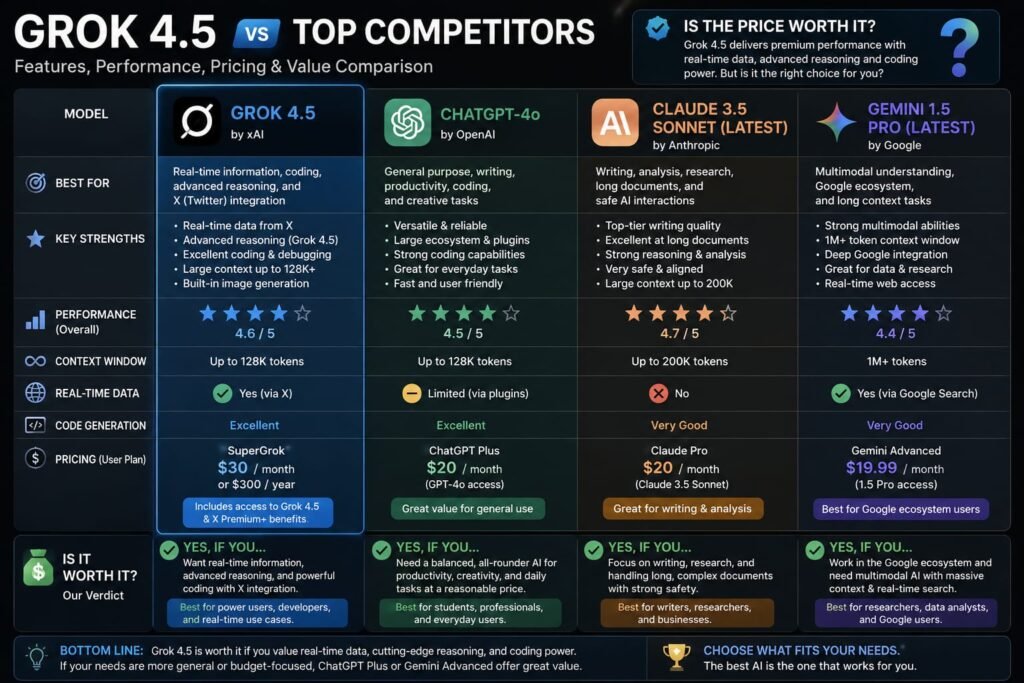
When evaluating grok 4.5 pricing, you have to look at the alternatives. How does it stack up against Claude Opus 4.8 or GPT-5.6?
According to independent benchmarks and developer feedback, Grok 4.5 matches—and sometimes exceeds—Opus-class performance on real-world engineering and coding tasks [[3]], [[11]]. But the real shocker is the cost. Developers have noted that Grok 4.5 delivers top-tier coding results for a fraction of the token cost of its main rivals [[14]].
If you are running an automated coding agent that processes thousands of lines of code a day, that $2/$6 per million token split can save your startup thousands of dollars a month compared to legacy models. You are getting frontier-level intelligence without the frontier-level price tag.
Hidden Costs and Usage Limits
Let’s be honest: navigating AI subscription tiers can feel like trying to read a menu in a language you do not speak. Are there hidden fees?
Understanding Token Limits and Context Windows
One massive advantage of Grok 4.5 is its massive 500k token context window [[7]]. This means you can feed it entire codebases or massive PDF reports in a single prompt. But beware: larger context windows mean more input tokens. If you upload a 200,000-token document and ask it five follow-up questions, you are paying for that massive input context multiple times.
Additionally, xAI charges differently for long-context processing (usually 200k tokens and above) and multimedia. Processing images starts at around $0.02 per image, and video processing starts at $0.05 per second [[16]], [[21]]. If you build an app that analyzes hours of video footage using the Grok API, your bill will skyrocket faster than you can say “machine learning.”
Which Plan is Right for You?
For Casual Users
If you just want to fact-check the news, write the occasional email, or brainstorm blog ideas, stick to the standard X Premium+ subscription or the free tier if it is available in your region. You likely do not need the 500k context window or the heavy API limits.
For Power Users and Developers
If you are a developer, data scientist, or run an AI-heavy agency, the $30/month SuperGrok plan is a no-brainer for personal use. It gives you a sandbox to test prompts before deploying them. For actual production apps, the API route at $2/$6 per million tokens is highly cost-effective, provided you optimize your prompt engineering.
Tips to Reduce Your Grok 4.5 API Costs
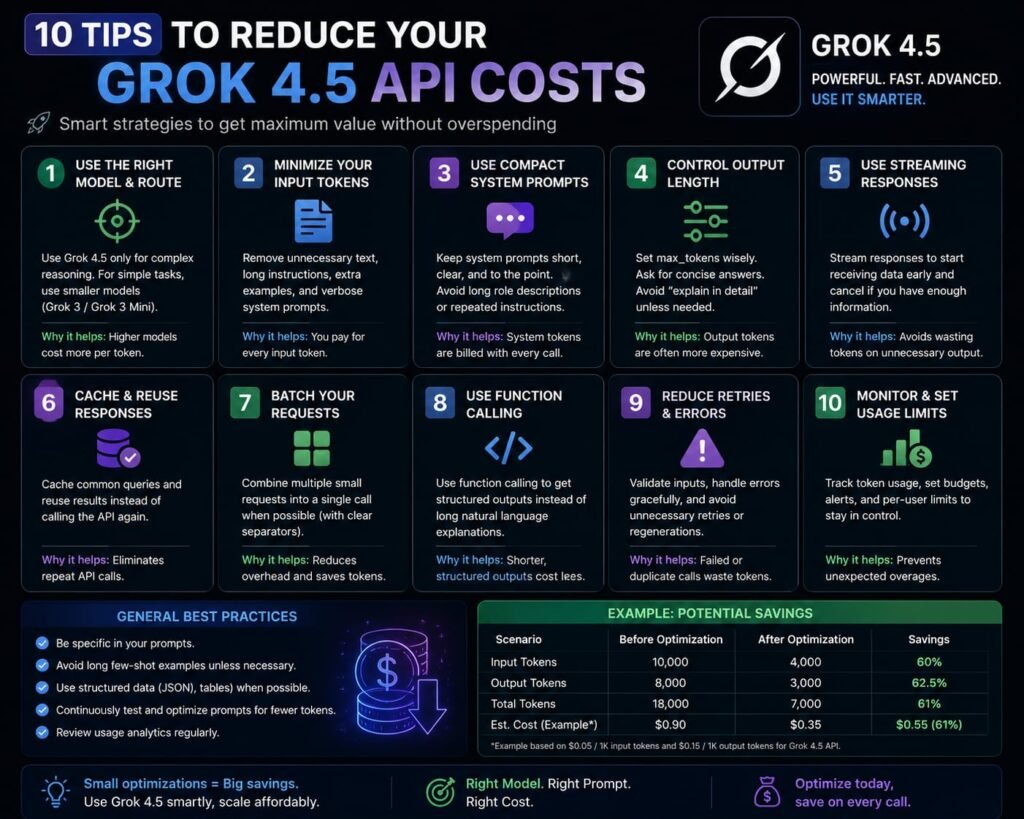
If you are paying via the API, here are a few actionable ways to keep your grok 4.5 pricing bills manageable:
- Prompt Caching: If you use the same system prompt for every interaction (e.g., “You are a senior Rust developer…”), use xAI’s prompt caching features. You are not charged full input rates for cached text.
- Batch Processing: Do not make 1,000 individual API calls. Bundle your queries into a single batch request. xAI offers significant discounts for batch API processing [[21]].
- Truncate Context: Only feed the AI the exact snippet of code or text it needs to solve the immediate problem. Do not dump a whole repository into the context window unless absolutely necessary.
The Future of xAI and Grok Updates
The AI space moves at breakneck speed. Even as we analyze Grok 4.5, xAI is already teasing and releasing subsequent updates (with documentation pointing toward Grok 4.6 updates in early 2026 [[16]]). xAI is aggressively building out its own compute centers, which means their long-term strategy is to drive prices down while scaling up intelligence. Subscribing to the ecosystem now locks you into a platform that is only going to get more powerful.
FAQ: Common Questions About Grok 4.5 Pricing
Here are direct answers to the most common questions we get from readers.
1. What is Grok 4.5?
Grok 4.5 is the latest frontier AI model developed by SpaceXAI (xAI). It is a mixture-of-experts model specifically optimized for coding, agentic tasks, and deep knowledge work, boasting a 500k token context window.
2. How much does Grok 4.5 cost per month for consumers?
For consumers, the most popular way to access Grok 4.5 without limits is through the SuperGrok subscription, which costs $30 per month [[15]]. There is also a “Heavy” tier for power users that can cost up to $300/month.
3. Is there a free version of Grok 4.5?
xAI occasionally offers limited free tiers or trials via the standalone Grok app or X, but access to the full, unrestricted Grok 4.5 model generally requires a paid X Premium+ or SuperGrok subscription.
4. How to get Grok on mobile?
You can get Grok on mobile by downloading the official Grok app from the iOS App Store or Google Play Store [[13]]. Alternatively, you can access it through the X app if you have an active Premium subscription.
5. What is the API cost for 1 million tokens?
The grok 4.5 pricing for API usage is $2.00 per 1 million input tokens and $6.00 per 1 million output tokens [[6]], [[12]].
6. Can I use Grok 4.5 inside my code editor?
Yes. Grok 4.5 was trained jointly with Cursor, making it one of the best models available for in-IDE coding assistance, debugging, and refactoring [[9]].
7. Does Grok 4.5 support image and video understanding?
Yes, it is a multimodal model. However, API usage for media costs extra, starting at roughly $0.02 per image and $0.05 per second of video processed [[16]].
8. Is Grok 4.5 cheaper than GPT-5.6 or Claude Opus?
Yes. Multiple developer analyses show that Grok 4.5 matches or beats the coding performance of Opus-class models while operating at a significantly lower token cost [[3]], [[14]].
My Final Conclusion: Is Grok 4.5 Worth the Investment?
So, is it worth it? If you are a developer looking to automate your workflow, a researcher who needs to digest massive documents, or simply someone who wants a highly capable, real-time AI assistant, the answer is a resounding yes. The grok 4.5 pricing structure—especially the aggressive API rates and the $30/month SuperGrok tier—makes it one of the most cost-effective frontier models on the market today.
You are no longer just paying for a chatbot; you are paying for a highly specialized, coding-savvy reasoning engine that integrates directly into the tools you already use.
Grok 4.5 is not the only advanced AI model worth considering, and choosing the right tool depends on your specific needs, budget, and preferred workflow. If you’re exploring alternatives from the growing Chinese AI ecosystem, take a look at our Qwen 3.8 features and pricing guide to understand what Qwen offers and how its capabilities compare with other leading models. You can also read our Kimi AI vs ChatGPT comparison to see how Kimi stacks up against ChatGPT for everyday use, research, reasoning, and productivity. And if you’re deciding between premium AI subscriptions from OpenAI and Anthropic, our Claude Pro vs ChatGPT Pro comparison breaks down their features, pricing, performance, and ideal use cases. Looking at Grok 4.5 alongside Qwen, Kimi, Claude, and ChatGPT can help you make a more informed decision about which AI model offers the best combination of performance, features, and value for your needs.
Related Reads:
What Is Lovable AI? The Complete Guide to the AI App Builder Everyone’s Talking About
Is Lovable AI Free? Here’s What You Actually Get
Claude Pro vs ChatGPT Plus: The Real Difference Between These $20 AI Plans
How to Fix AI Image Generator Deformities in Fingers, Toes, and Other Anomalies
What Is Meta AI Muse Spark? The Complete 2026 Guide to Meta’s Flagship AI Model
Kimi K3 Explained: Inside Moonshot AI’s Record-Breaking Open Mode
Best AI App Builder in 2026: 10 Top Tools to Build an App Without Coding
Seedance 2: Inside ByteDance’s Most Realistic AI Video Model Yet (2026)
Is Kling 3.0 Unlimited? The Honest Truth About Free Credits, Paid Plans, and Hidden Costs in 2026