

Looking for Lovable AI alternatives? Compare 12 top AI app builders by use case, pricing, and features to find the right fit for your project.
Lovable earned its reputation fast turning a plain-English prompt into a working full-stack web app in minutes is a genuinely impressive trick, and it’s why the platform reportedly crossed millions of users within its first year. But “impressive first demo” and “right tool for your specific project” aren’t always the same thing, and a growing number of builders are searching for Lovable AI alternatives once they hit the platform’s real limits — credit consumption, web-only output, or the need for deeper code control than a prompt-based tool can offer.
This guide breaks down the strongest Lovable alternatives on the market right now, organized by exactly what each one does best fast prototyping, native mobile apps, complex business logic, developer-first coding, and internal tools so you can find the right fit for your project instead of just picking whichever name is trending. By the end, you’ll know exactly which alternative to try first.
Why People Look for Lovable AI Alternatives
Before jumping into the list, it’s worth understanding the specific pain points that send people searching for something else, since matching the alternative to the actual problem matters more than chasing a generically “better” tool.
Credit consumption outpaces expectations. Like most AI app builders, Lovable’s credit-based pricing means complex features — authentication, payments, multiple rounds of revision — can burn through a monthly allowance faster than anticipated, pushing some users toward tools with more generous or predictable usage models.
Web-only output. Lovable generates React-based web applications, not native iOS or Android apps. Anyone whose end goal is an actual App Store listing needs a different tool entirely, regardless of how well Lovable performs otherwise.
Coding knowledge is still required for real customization. Lovable hands you real code, which is a strength for portability but means non-technical users still hit a wall once they need to debug, deploy, or meaningfully customize something beyond what a prompt can describe.
Complex business logic outgrows prompt-based generation. Highly custom permission systems, multi-role workflows, or deep data relationships are consistently the areas where prompt-first tools like Lovable need the most rounds of correction — sometimes fewer than a purpose-built visual tool would need.
Internal tools need different priorities. Admin panels, approval flows, and dashboards connected to existing databases often benefit more from tools purpose-built for operational software than from a general-purpose app generator.
What to Look for in a Lovable Ai Alternative
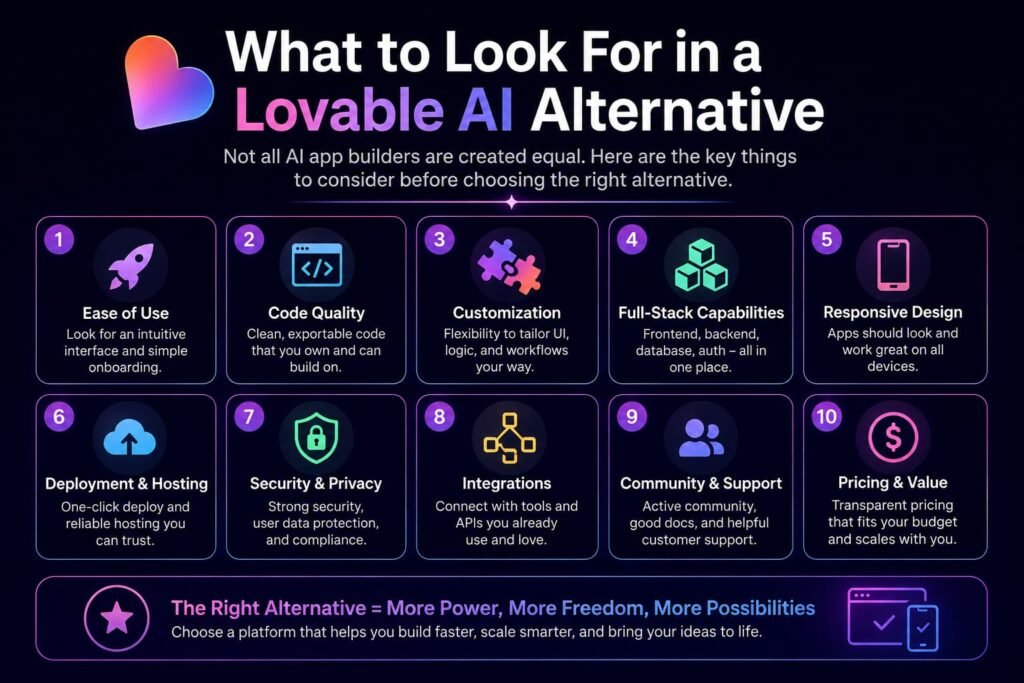
Not every alternative solves the same problem, so it helps to know what you’re actually evaluating before comparing specific tools.
Output Type: Web, Mobile, or Both
This is the single biggest fork in the road. If native mobile output matters, you need a tool built specifically for that — most of Lovable’s closest web-focused competitors won’t help you here at all.
Code Ownership and Portability
Some alternatives, like Lovable itself, hand you real, exportable code. Others keep your app inside a more managed, visual-only environment. If you might eventually want a developer to take over, code portability matters more than almost anything else.
Backend Depth
A landing page and a complex SaaS product need very different backend capabilities. Match the tool’s backend depth to how complicated your data model and business logic actually are.
Pricing Predictability
Credit-based pricing, common across this entire category, can make monthly costs hard to predict. Understanding how a specific alternative bills you — and how generously before committing saves real budget surprises.
Best Lovable AI Alternatives at a Glance
| Tool | Best For | Output | Starting Price |
|---|---|---|---|
| Bolt.new | Fast, browser-based web prototypes | Web | Free, Pro ~$25/mo |
| Replit | Learning to code while building, full control | Web (multi-language) | Free, Core ~$20-25/mo |
| Base44 | Non-technical business apps, fastest setup | Web | Free, Starter ~$16/mo |
| v0 | Polished, production-ready React UI | Web components | Free, paid tiers vary |
| Bubble | Complex, database-heavy web apps | Web | Free, paid tiers vary |
| FlutterFlow | Native mobile with visual control | Flutter (iOS/Android) | Free, Basic ~$39/mo |
| Rork | Fast native mobile app generation | React Native/Swift | Free, Junior ~$20-25/mo |
| Cursor | Developers with an existing codebase | Any (IDE-based) | Free, Pro ~$20/mo |
| Claude Code | Terminal-first agentic coding | Any (CLI/IDE) | Bundled with Claude Pro |
| Retool / UI Bakery | Internal tools and admin panels | Web (internal) | Free, paid tiers vary |
| Softr / Glide | Simple apps from spreadsheet data | Web | Free, paid tiers vary |
| Rocket | Research + build + post-launch monitoring | Web + mobile | Free, Build ~$25/mo |
Bolt.new: Best for Fast, Browser-Based Web Prototypes
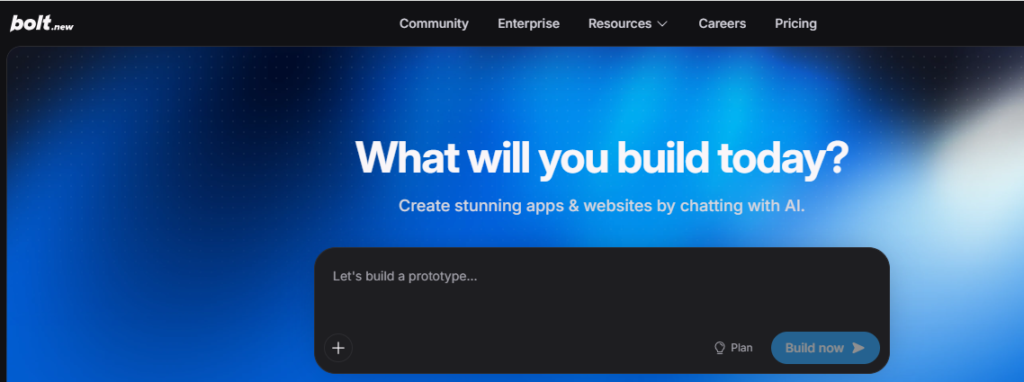
Bolt.new is the most direct head-to-head competitor to Lovable, and the comparison is close. Both generate full-stack web applications with a real backend, but Bolt takes a different technical approach running an entire Node.js environment client-side through WebContainers technology, which lets it generate code and update your live preview essentially instantly, without a cloud round-trip delay.
Best for: Builders who want to see a working prototype appear in real time, with a genuinely usable free tier (1 million tokens/month) and Figma import for design-to-code workflows.
How it differs from Lovable: Bolt’s speed advantage comes from its browser-native architecture, while Lovable’s two-stage Plan-then-Build workflow is designed to catch misunderstandings before code gets written. Pricing lands in a similar range for both.
Replit: Best for Learning to Code While Building
Replit takes a fundamentally different approach than Lovable it’s a full, browser-based development environment that added an AI agent layer, rather than an AI-first generator built from scratch. That history matters: Replit supports multiple programming languages (Python, JavaScript, Java, Go, and more), not just the React/TypeScript scope Lovable is built around.
Best for: Developers and technically curious founders who want direct, continuous access to their code throughout the build process, or anyone whose project needs something beyond a standard web app pattern.
How it differs from Lovable: Replit’s effort-based credit pricing can be less predictable for complex tasks, but its language flexibility and live-editing environment give it far more range than Lovable’s tighter web-app focus.
Base44: Best for Non-Technical Business Apps
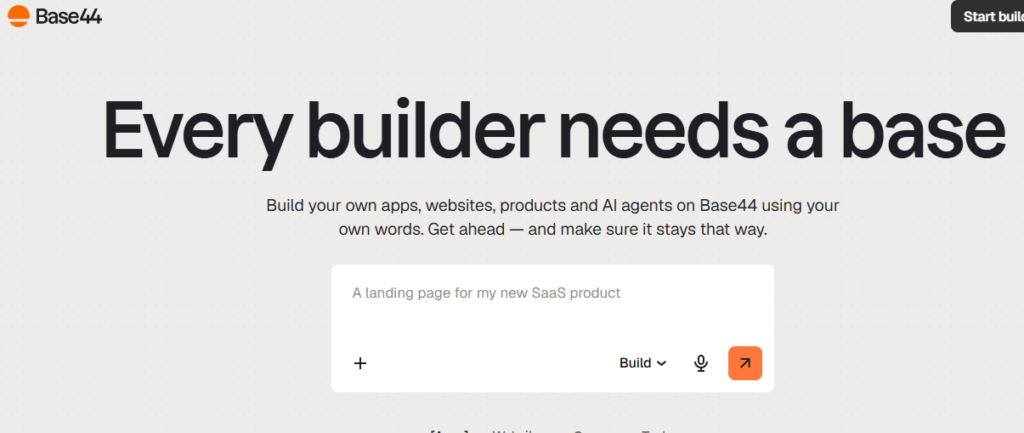
Base44 pushes automation even further than Lovable, handling database, authentication, and hosting entirely on its own, with fewer configuration decisions left to the user. It’s consistently cited as one of the fastest, most beginner-friendly entry points into AI app building.
Best for: Founders and small business owners who want the absolute lowest barrier to a working app, and who value Base44’s lower entry-level pricing (starting around $16/month versus Lovable’s roughly $25/month equivalent tier).
How it differs from Lovable: Base44 trades some of Lovable’s structural planning (the Plan-then-Build workflow) for even greater simplicity, which works well for straightforward apps but can mean more surprises on highly custom logic.
v0: Best for Polished, Production-Ready React UI
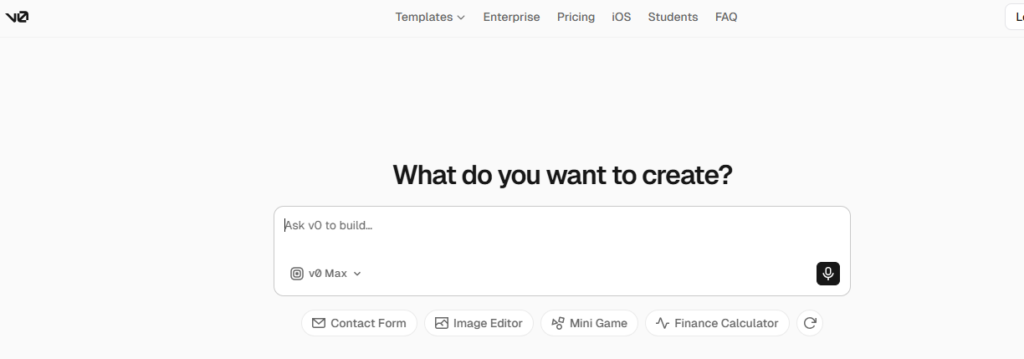
v0, built by Vercel, takes a narrower, more design-focused approach than Lovable. Rather than generating a complete application end-to-end, it specializes in producing clean, production-ready React, Tailwind, and shadcn/ui components that plug directly into an existing or new codebase, paired tightly with Vercel’s deployment pipeline.
Best for: Developers and small teams who want the cleanest possible UI output and are comfortable wiring up backend logic separately, or pairing v0 with another tool for the full application.
How it differs from Lovable: Lovable aims for a complete, functioning app out of the box; v0 aims for best-in-class component quality specifically, leaving more of the full-stack assembly to you.
Bubble: Best for Complex, Database-Heavy Web Apps
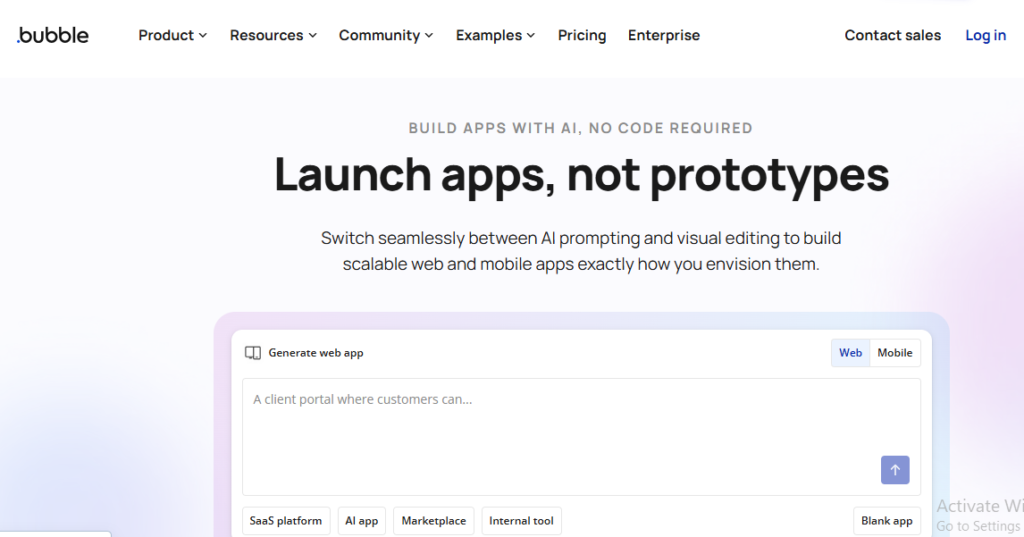
Bubble predates the current wave of AI app builders by years, and it remains one of the most powerful platforms for genuinely complex web applications — the kind with deep, interconnected data, custom workflows, and business logic that a prompt alone struggles to fully capture. Its visual, drag-and-drop workflow editor gives you a level of granular control that prompt-based tools like Lovable generally can’t match.
Best for: Startups building a complex SaaS product, marketplace, or internal system that needs more structural depth than a quick AI-generated app can offer.
How it differs from Lovable: Bubble has a steeper learning curve and a slower initial build process than Lovable’s fast prompt-to-app experience, but it scales further into genuine application complexity.
FlutterFlow and Rork: Best for Native Mobile Apps
If your core reason for seeking a Lovable alternative is that you need a real, installable mobile app not a web app dressed up to look like one — this is the category that solves it, since Lovable doesn’t produce native output at all.
FlutterFlow
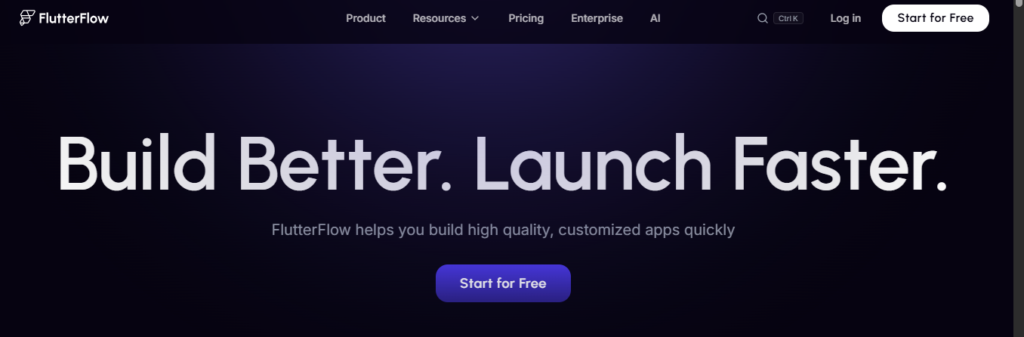
FlutterFlow combines AI generation with a full visual builder on Google’s Flutter framework, letting you export real, production-ready Flutter code for native iOS, Android, web, and desktop from a single codebase. It has a steeper learning curve than Lovable, but offers deep visual control over the AI-generated result.
Rork
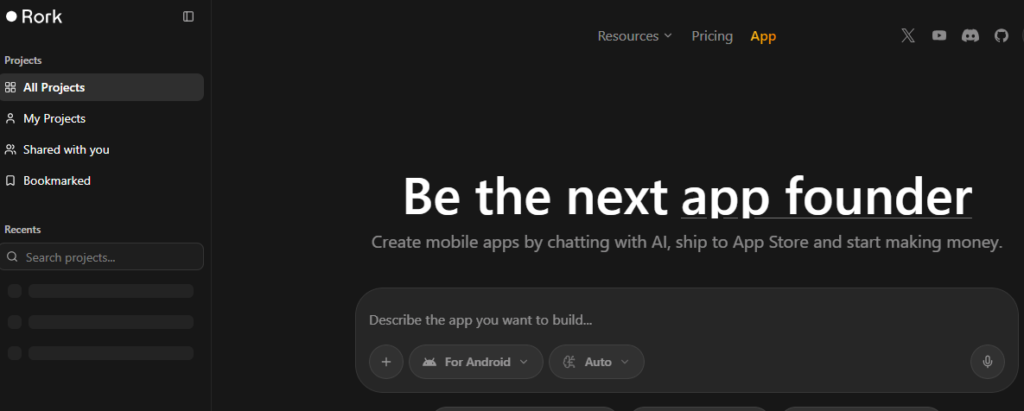
Rork focuses specifically on speed for mobile: describe your app, and it generates a fully functional cross-platform app using React Native and Expo — the same production framework behind apps like Discord and Coinbase with instant preview on your own phone and direct App Store publishing. Its more advanced Rork Max tier builds fully native Swift apps for deeper Apple-specific features.
Best for: Founders and product managers who specifically need App Store or Google Play presence without hiring a mobile developer.
Cursor: Best for Developers With an Existing Codebase
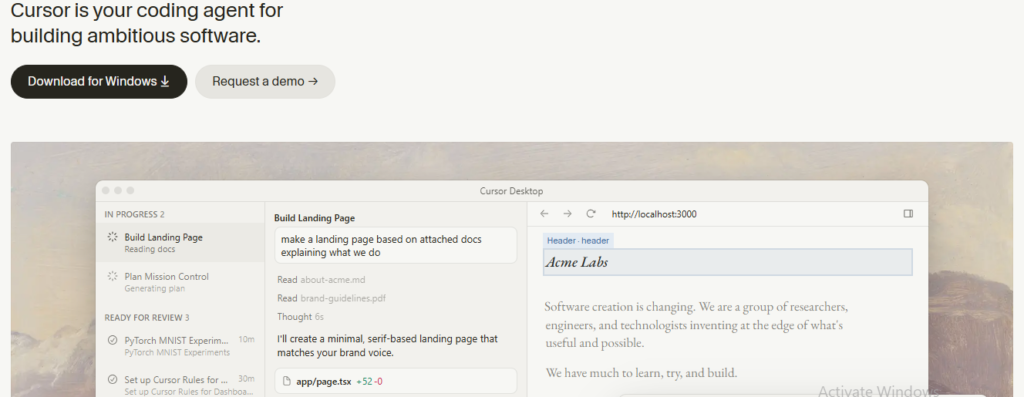
Cursor represents a meaningfully different category of “alternative” than the tools above it’s not a visual app builder at all, but an AI-powered code editor built for developers who want AI as an active collaborator inside a real IDE, rather than a generator producing an app from outside their existing workflow.
Best for: Teams that already have a codebase and need to understand, refactor, extend, or debug it with AI assistance, rather than generating something new from scratch.
How it differs from Lovable: Lovable is strongest for quickly generating a first interface or app from nothing; Cursor is strongest when maintainability, debugging, and iteration inside an existing, real production codebase matter more than raw generation speed.
Claude Code: Best for Terminal-First, Agentic Coding
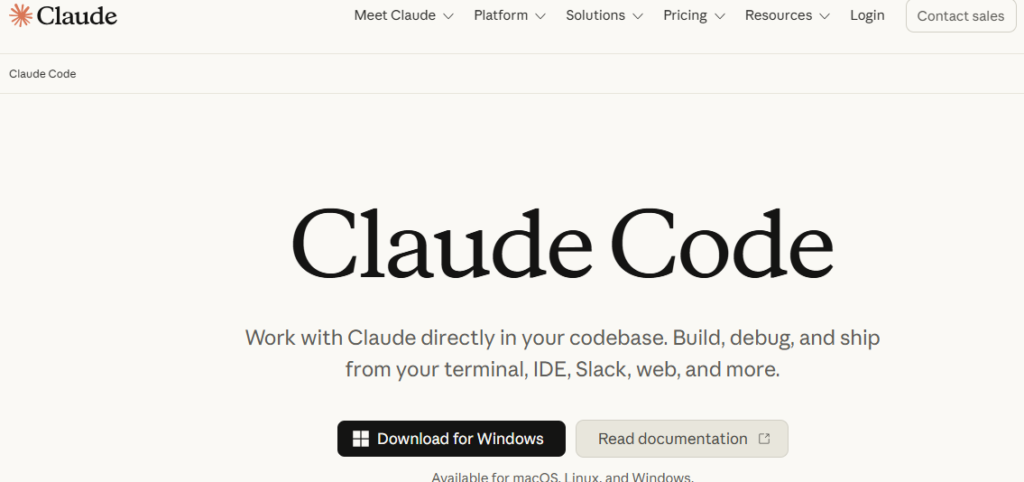
Claude Code is Anthropic’s agentic coding tool, bundled into Claude Pro and higher subscription tiers, built for developers who want an AI agent working directly in their terminal or IDE rather than through a separate visual app-building interface. It can read across an entire codebase, make coordinated multi-file edits, run tests, and iterate on fixes with minimal manual prompting at each step.
Best for: Developers and technical teams who want structured, terminal-first agentic coding assistance on real, existing projects rather than a prompt-to-app generation experience.
How it differs from Lovable: Claude Code assumes you’re comfortable working in a terminal or IDE and are focused on genuine software engineering tasks, rather than the more guided, visual, app-from-scratch experience Lovable is built around.
Retool and UI Bakery: Best for Internal Tools and Admin Panels
Once you move past the first prototype, a common realization is that Lovable like most general-purpose app generators isn’t purpose-built for internal, operational software: admin panels, approval workflows, CRUD apps, and dashboards connected to existing company data.
Retool and UI Bakery both specialize specifically in this category, offering visual builders purpose-built for connecting to existing databases and APIs, with Retool notably supporting self-hosted deployment for teams with security or compliance requirements that rule out a fully cloud-based tool.
Best for: Teams building internal business tools rather than customer-facing products, especially where connecting to existing production data matters more than generating a brand-new application from scratch.
Softr and Glide: Best for Simple Apps Built From Existing Data
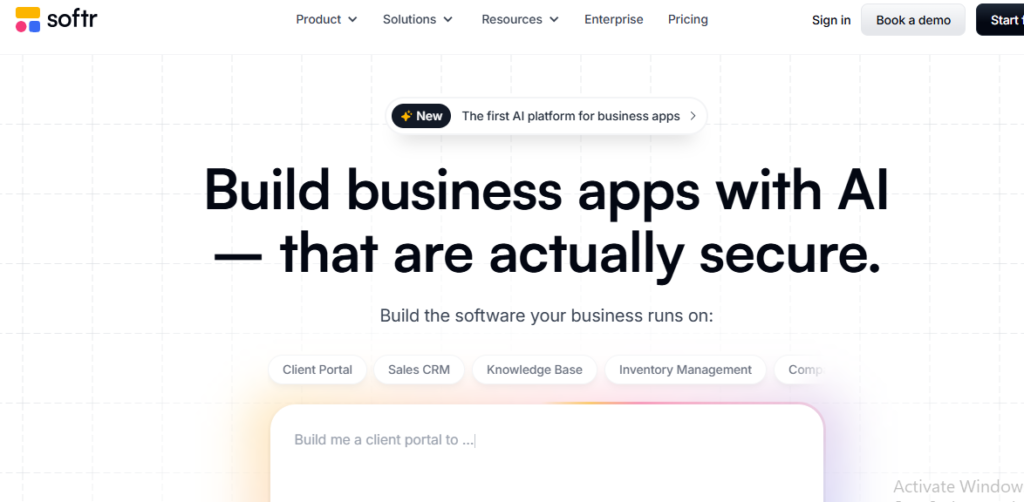
If your “app” is really just a better front end for data you already have in a spreadsheet or database, Softr and Glide are purpose-built for exactly that — turning existing structured data into a usable app quickly, without the broader application-generation approach Lovable takes.
Best for: Operations-heavy teams that already have well-organized data and need a simple, templated app a directory, booking system, or internal portal — rather than a fully custom product.
Rocket: Best for Research, Build, and Post-Launch Monitoring in One
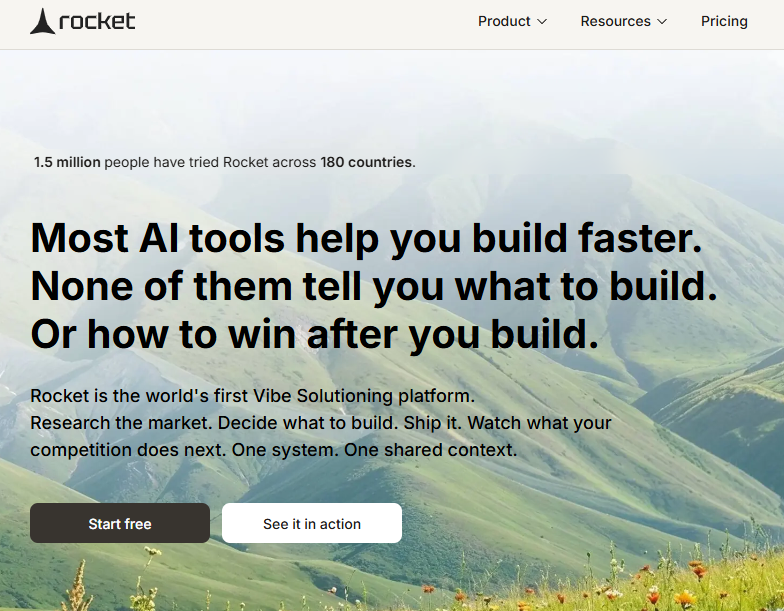
Rocket (Rocket.new) takes a broader view of the app-building process than Lovable, bundling three connected products: Solve for market research and validation before you build, Build for generating the actual application (with automatic backend integrations for payments, database, and email), and Intelligence for ongoing competitor monitoring after launch.
Best for: Founders who want validation and post-launch tracking bundled with their app builder, and anyone who needs both web and native mobile output from the same platform Rocket generates React/Next.js for web and Flutter for mobile from a shared workflow, something Lovable doesn’t offer.
How it differs from Lovable: Lovable focuses tightly on the build step itself; Rocket extends before and after that step, at the cost of a broader, sometimes more complex credit system spanning three different products.
How to Choose the Right Lovable Alternative for Your Project
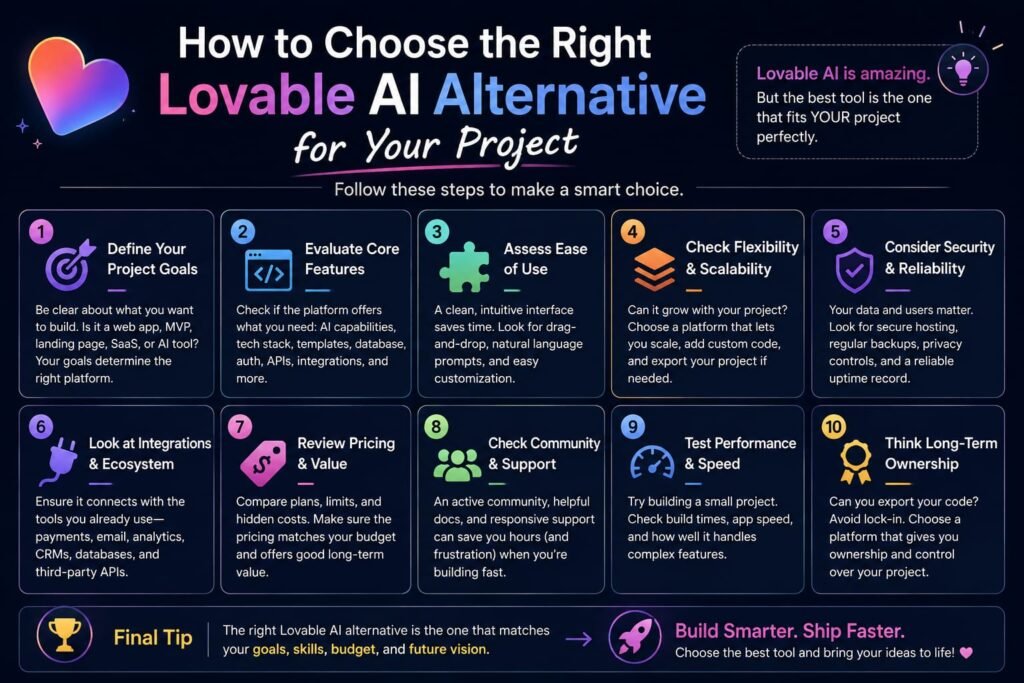
With this many solid options, a few honest questions will point you toward the right one faster than trying every tool on the list.
Do You Need Web, Mobile, or Both?
If mobile output is non-negotiable, skip straight to FlutterFlow, Rork, or Rocket none of the web-focused alternatives will solve that problem no matter how good they otherwise are.
Are You Building From Scratch or Working in an Existing Codebase?
If you already have a real, production codebase, Cursor or Claude Code will serve you far better than a from-scratch generator like Bolt or Base44.
Is Your App Customer-Facing or Internal?
Customer-facing products generally benefit from Lovable-style full-stack generators; internal, operational tools are usually better served by Retool, UI Bakery, or a data-driven tool like Softr or Glide.
How Complex Is Your Data and Business Logic?
Simple apps with straightforward data work well in almost any tool on this list. Apps with deep, interconnected data and custom workflows are better served by Bubble’s visual depth than by a prompt-first generator.
Do You Want the App Builder to Also Handle Research or Monitoring?
If you’d rather not juggle separate tools for idea validation, building, and post-launch competitive tracking, Rocket’s combined approach is worth a serious look — though it’s a heavier platform than you need if you just want a fast build tool.
Frequently Asked Questions
What is the best overall alternative to Lovable AI?
There’s no single best alternative it depends on your use case. Bolt.new is the closest direct competitor for fast web prototypes, Base44 is the most beginner-friendly, and FlutterFlow or Rork are the top choices if you specifically need native mobile output.
Why would someone switch from Lovable to a different AI app builder?
The most common reasons are needing native mobile output (which Lovable doesn’t provide), running into credit limits faster than expected on complex features, or outgrowing prompt-based generation for highly custom business logic that a visual tool like Bubble handles more precisely.
Is there a free alternative to Lovable?
Yes, most alternatives on this list offer a genuine free tier, including Bolt.new, Replit, Base44, and Cursor, though usage limits vary significantly and most serious projects will eventually require a paid plan.
What’s the best Lovable alternative for building a mobile app?
FlutterFlow and Rork are both built specifically for native iOS and Android output, unlike Lovable and most of its closest web-focused competitors, which don’t produce installable App Store or Google Play apps.
Is Bolt.new better than Lovable?
Neither is universally better they’re close competitors with different technical approaches. Bolt’s browser-native WebContainers technology offers faster real-time preview, while Lovable’s two-stage Plan-then-Build workflow is designed to reduce mid-build misunderstandings.
What’s the best alternative for developers who already have a codebase?
Cursor and Claude Code are both built specifically for working within an existing codebase, offering AI assistance for debugging, refactoring, and extending real production code, rather than generating a new app from scratch the way Lovable does.
Are there Lovable alternatives specifically for internal business tools?
Yes. Retool and UI Bakery are purpose-built for admin panels, approval workflows, and dashboards connected to existing company data, which tend to be a better fit for internal software than a general-purpose app generator like Lovable.
Which Lovable alternative is cheapest for beginners?
Base44’s entry-level Starter plan, at roughly $16/month, generally undercuts Lovable’s comparable tier, making it one of the more affordable entry points for non-technical beginners specifically.
Can I use a Lovable alternative to build both a website and a mobile app?
Rocket is one of the few tools on this list that generates both React/Next.js web apps and native Flutter mobile apps from the same underlying workflow, which is a meaningful advantage if your product needs both a website and a mobile app.
Do these Lovable alternatives let me keep and export my code?
Most do, though the level of code ownership varies. Bolt, Lovable, FlutterFlow, and Rocket all sync to GitHub or support code export; Cursor and Claude Code work directly within your own codebase by design; more managed platforms like Base44 offer less direct export flexibility.
Is Bubble a good alternative to Lovable for a complex SaaS product?
Yes, Bubble is generally considered stronger than Lovable for genuinely complex, database-heavy applications, thanks to its deeper visual workflow editor, though it comes with a steeper learning curve and a slower initial build process.
My Final Thoughts: Finding Your Best Lovable AI Alternative
There’s no single winner in the search for Lovable AI alternatives the right choice depends entirely on what Lovable specifically isn’t giving you. If it’s native mobile output, FlutterFlow or Rork solve that directly. If it’s deeper control inside an existing codebase, Cursor or Claude Code are the better fit. If it’s more structural depth for a genuinely complex product, Bubble is worth the steeper learning curve. And if you want a broader platform that also handles validation and post-launch monitoring, Rocket extends further than Lovable does on either end.
The fastest way to find your fit isn’t more reading — it’s a real, side-by-side test. Pick the two alternatives from this list that most directly address whatever’s frustrating you about Lovable, describe the same small feature or app on both, and see which one actually solves your specific problem. Most of these tools offer a free tier, so that comparison will cost you nothing but an afternoon and it’ll tell you far more than any single ranked list, including this one.
🚀 Build apps and websites with AI in minutes! If you’ve been looking for an easier alternative to traditional coding, Lovable AI is worth checking out. It’s fast, beginner-friendly, and perfect for turning ideas into real projects.
Related Reads-
What Is Lovable AI? The Complete Guide to the AI App Builder Everyone’s Talking About
Is Lovable AI Free? Here’s What You Actually Get
Claude Pro vs ChatGPT Plus: The Real Difference Between These $20 AI Plans
How to Fix AI Image Generator Deformities in Fingers, Toes, and Other Anomalies
What Is Meta AI Muse Spark? The Complete 2026 Guide to Meta’s Flagship AI Model
Kimi K3 Explained: Inside Moonshot AI’s Record-Breaking Open Mode
Best AI App Builder in 2026: 10 Top Tools to Build an App Without Coding
Bolt AI App Builder: The Complete Guide to Building Apps in Your Web Browser
Higgsfield AI Pricing in 2026: Every Plan, Credit Cost, and What You Actually Get
Base 44 Pricing in 2026: Every Plan, Credit Cost, and Hidden Fee Explained
Base44 Reviews 2026: What Real Users Actually Think Before You Build
FlutterFlow AI App Builder: The Complete 2026 Guide to Building Real Native Apps
Kimi AI App: The Complete Guide to Download, Features, and How It WorksIs
Kimi AI vs ChatGPT: Which AI Assistant Actually Wins in 2026?
Moonshot AI Kimi K2 Explained: The Open-Source Model Series That Changed AI in 2026
Rocket AI App Builder: The Complete Guide to Solve, Build, and Intelligence
What LLM Does Replit Use? A Complete Guide to Replit’s AI Models, Agents, and Integrations in 2026
Replit vs Lovable: Which AI App Builder Should You Actually Use in 2026?
Replit vs Cursor (2026): The Honest Comparison for Builders, Founders, and Developers
Hostinger AI Website Builder Review: Is It Actually Worth It in 2026?